
Subtotal ₹0.00
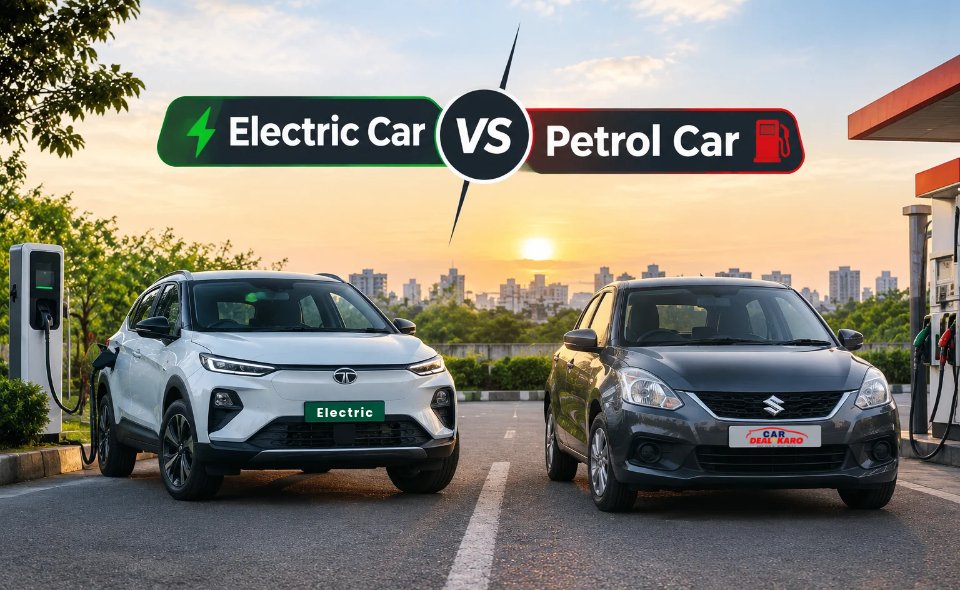
Buying a used car can help you save money, but choosing between an electric car and a petrol car can be confusing. Both have their own benefits, so the right choice depends on your budget, daily travel, and charging options.
An electric car runs on a battery, while a petrol car runs on petrol. Because of this, they differ in running costs, maintenance, and the way you use them every day. In India, a used electric car can be a good choice for daily city travel, especially if you have a charging point at home. A petrol car can be more suitable if you often travel long distances or do not have easy access to charging. Before making a decision, it is important to understand how both options compare.
What Is the Difference Between Used Electric Cars and Petrol Cars?
A used electric car runs on an electric motor that gets power from a rechargeable battery. You need to charge the battery instead of filling a fuel tank. Electric cars are usually quiet and offer smooth driving, which can be useful in city traffic.
A petrol car uses an engine that runs on petrol. You need to fill the fuel tank and get the engine serviced from time to time. Petrol cars are available in many models and price ranges, so they are a common choice for Indian families. The main difference is how they get the power to run. Electric cars use stored electricity, while petrol cars use fuel. When buying either type, you should check the car’s condition, service history, and whether it suits your daily travel.
Key Differences Between Used Electric Cars and Petrol Cars
Here are the main differences to consider before buying a second-hand electric or petrol car.
| Comparison | Used Electric Cars | Used Petrol Cars |
| Power source | Electricity stored in a battery | Petrol |
| Main parts | Electric motor and battery | Petrol engine |
| Running cost | Usually lower with home charging | Depends on petrol price and mileage |
| Maintenance | Usually needs fewer routine checks | Needs regular engine servicing |
| Charging or refueling | Needs time to charge | Usually takes a few minutes to refuel |
| Driving experience | Quiet and smooth | Familiar engine sound and feel |
| Important checks | Battery health and charging system | Engine, gearbox, and service history |
| Daily use | Good for city travel if charging is easy | Useful for city and long-distance travel |
In simple words, an electric car may cost less to run, but you need to check its battery and charging options. A petrol car is easier to refuel in most places, but you need to plan for fuel and regular servicing costs.
1. Running Cost of Used Electric Cars vs. Petrol Cars
Running cost is one of the main things people look at when buying a used car. Electric cars usually cost less to run per kilometer when you charge them at home. Petrol cars can cost more because the total expense depends on petrol prices and the car’s mileage.
For example, let us say a petrol car gives a mileage of 15 km per liter and petrol costs ₹100 per liter. To cover 100 km, the car would need around 6.67 liters of petrol. This would cost about ₹667. Now, suppose an electric car uses 15 units of electricity to cover 100 km, and electricity costs ₹8 per unit. The charging cost would be around ₹120 for the same distance.
In this example, the electric car saves about ₹547 per 100 km on energy costs. These are only sample figures. The actual cost will depend on the car, driving style, traffic, charging losses, and local electricity rates. If you use your car every day, an electric car may help you save on running costs. However, public charging can be more expensive than charging at home. So, compare the running costs of the cars you are planning to buy before making a decision.
2. Maintenance Cost of Electric Cars and Petrol Cars
Electric cars usually need less routine maintenance because they have fewer moving parts than petrol cars. They do not need engine oil changes or spark plug replacements, which can help reduce some regular service costs.
However, electric cars still need care. You should check the tyres, brakes, suspension, air conditioning, and electrical parts. The battery and charging system should also be checked before buying a used electric car.
Petrol cars need regular engine servicing, including oil and filter changes. Depending on the car, you may also need to spend money on spark plugs, the cooling system, clutch, gearbox, or fuel system.
The maintenance cost of either car depends on its age, condition, service history, and the parts that need repair or replacement.
Before buying a used electric car, get its battery and charging system checked. For a petrol car, look for engine noise, oil leaks, overheating, and gearbox problems. A professional inspection can help you understand the car’s condition before you spend your money.
3. Battery Health in Used Electric Cars
Battery health is one of the most important things to check when buying a used electric car. The battery stores the power needed to run the car, but its capacity can reduce over time. When battery capacity goes down, the car may not travel as far on a full charge as it did when it was new. The amount of battery wear depends on factors such as the car’s age, usage, temperature, and charging habits.
Before buying a second-hand electric car, ask for a battery health report from an authorized service center or a qualified EV expert. Check the driving range and compare it with the car’s original range, keeping normal driving conditions in mind. You should also check the battery warranty, charging performance, dashboard warning lights, and service records. Ask whether the remaining warranty can be transferred to the new owner.
Do not judge the battery only by the percentage shown when it is fully charged. A proper battery check can help you find problems that may not be clear during a short test drive.
4. Charging an Electric Car vs Refueling a Petrol Car
Charging is another important point to think about before choosing a used electric car. If you have a suitable parking space and can safely install a home charger, charging an electric car can be easy. You can charge it while it is parked and use it for your daily travel. But charging can become difficult if you live in an apartment without a proper charging facility. In that case, you may need to use public charging stations. Before buying an electric car, check whether chargers are available near your home, office, and regular travel routes.
Petrol cars are easier to refuel in most parts of India. Petrol pumps are widely available, and filling the tank usually takes only a few minutes. If you often travel long distances or cannot charge a car at home, a petrol car may be more convenient. But if your daily travel is mostly within the city and home charging is available, an electric car may be a good option.
5. Which Is Better for Daily Driving in India?
A used electric car can be a good choice if you mostly drive within the city. It offers quiet driving, smooth acceleration, and the chance to save on running costs. It can work well for office travel, shopping, and other daily trips, as long as its driving range meets your needs. A used petrol car may suit you better if you travel to different places throughout the day or often go on long trips. You do not need to plan charging stops, and refueling is usually quick.
Before deciding, think about how many kilometers you drive each day and where you can charge the car. If your daily travel is mostly fixed and charging is easy, an electric car may be the right choice. If you travel long distances or have limited charging options, a petrol car may be more practical. Also, remember that the condition of the used car matters as much as its fuel type. A well-maintained car with a clear service history can be a better choice than a car that needs costly repairs.
Conclusion
Choosing between a used electric car and a petrol car in India depends on your budget, daily travel, and charging facilities. An electric car can help you save on running costs, while a petrol car is a good option for easy refueling and long trips.
Before buying, always check the car’s condition, service history, and maintenance needs. For an electric car, check the battery health and charging options. For a petrol car, check the engine and gearbox. Car Deal Karo offers used electric and petrol cars at competitive prices, making it easier to find a car that suits your budget. Explore the available options and choose the right car for your daily needs without going over your budget.
