
Subtotal ₹0.00
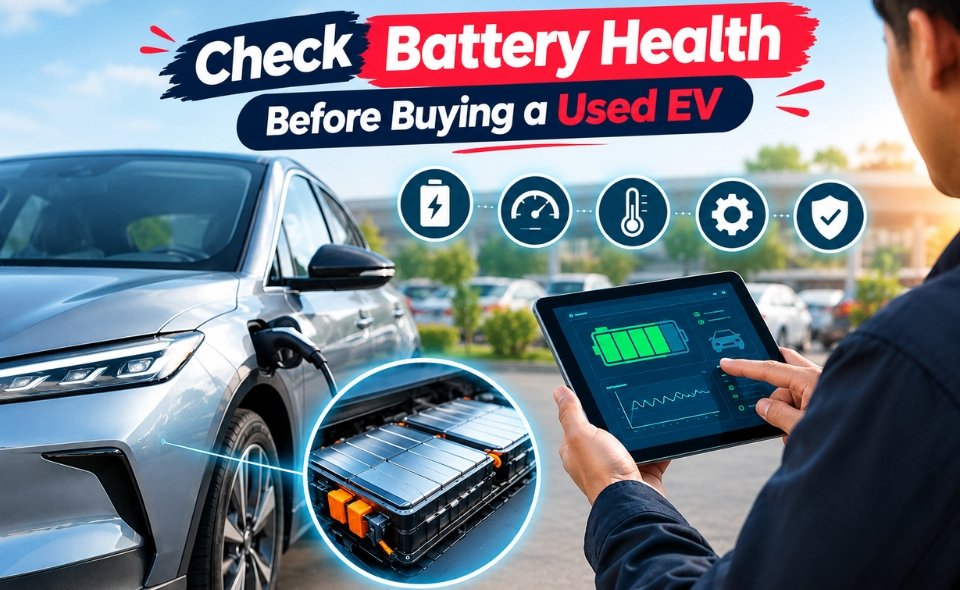
Buying a used electric car can be a smart way to save money and enjoy lower running costs. However, before buying a second-hand EV, it is important to check its battery health, driving range, and charging performance. The battery plays a major role in an electric car’s performance, and replacing it can be expensive.
Whether you are checking a used electric car in Jaipur or anywhere else in India, understanding its battery condition can help you make a better decision. In this guide, we will explain how to check EV battery health, understand battery State of Health (SoH), review battery warranty, and spot common warning signs before buying a used electric car.
Why Is Battery Health Important When Buying a Used Electric Car?
The battery is one of the most important parts of an electric vehicle (EV), as it affects driving range, charging performance, and future repair costs. Over time, an EV battery naturally loses some of its ability to store energy, which is known as battery degradation. This can happen due to the car’s age, charging habits, temperature, and driving conditions.
Two used electric cars of the same model may have similar kilometers on the odometer but different battery conditions. A car with a healthier battery may offer a better driving range, while another may need more frequent charging. That is why checking the battery health of a second-hand electric car is important before buying. Always check the battery condition, charging performance, and remaining driving range before making your final decision.
1. Check the Battery’s State of Health (SoH)
One of the best ways to understand an EV battery’s condition is to check its State of Health (SoH). SoH tells you how much of the battery’s original energy-storage capacity is still available. It is usually shown as a percentage. For example, suppose a battery originally had a usable capacity of 40 kWh, but now its estimated usable capacity is 36 kWh. This means the battery has around 90% of its original capacity, provided both figures are measured in the same way.
Here is a simple guide to understanding the battery health reading:
| Battery SoH | What it may mean for a buyer |
| 90% or above | Generally a good sign if other checks are also satisfactory |
| 80%–89% | May still be suitable for regular use |
| 70%–79% | Check the driving range, warranty, and future costs carefully |
| Below 70% | Get the battery checked properly before buying |
These percentages are only general guidelines. They are not fixed rules for every electric car. The car’s model, age, battery warranty, and actual performance also matter. Even a high SoH reading does not guarantee that the battery has no problems.
How Can You Check the SoH?
Ask the seller to get the battery checked at an authorized service center or a workshop that has experience with electric cars. Depending on the model, the technician may use the car’s own diagnostic system or a suitable EV testing tool.
Ask for a battery health report. Depending on the car, it may show the SoH percentage, usable battery capacity, battery-related fault codes, and other important details. Keep in mind that not every electric car may show SoH on its dashboard. Also, a basic OBD2 scanner may not be able to read all battery details. The available information depends on the car and its diagnostic system.
2. Compare the Real Driving Range With the Expected Range
Driving range shows how far an electric car can travel on a single charge. Before buying a used EV, check the expected range of the exact model and variant. Remember that the actual range can change due to AC use, traffic, weather, road conditions, and driving style.
Ask the seller to charge the car and check the range displayed on the dashboard, but do not rely on this figure alone. If possible, take a test drive and note the battery percentage before and after the drive. If the battery charge drops unusually fast during a short trip, ask a qualified technician to inspect it. For a better understanding of EV battery health, combine the driving range check with a professional battery report.
3. Check Battery Health With an EV Diagnostic Report
A car may look good from the outside and drive smoothly, but that does not mean its battery is free from problems. This is why getting a professional battery check is one of the most important steps when buying a used electric car. Ask the seller to take the car to an authorized service center or a workshop that has the right tools to check that particular EV model.
During the inspection, ask the technician to check the following points, wherever the car supports these checks:
- Battery State of Health and available capacity.
- Battery-related warning messages and stored fault codes.
- Differences in battery cell or module readings.
- Battery temperature and cooling system operation, where applicable.
- Charging system problems and signs of earlier battery repairs.
- Other issues found by the car’s diagnostic system.
Ask for a copy of the inspection report. If you do not understand any result, ask the technician to explain it in simple words. A general car inspection is useful, but it may not include a detailed check of the high-voltage battery.
Before booking an inspection, confirm that the workshop can check the battery properly. If the seller refuses to let you get the battery checked, be careful. This does not automatically mean something is wrong with the car, but you should not take such a big financial risk without proper information.
4. Check the Battery Warranty
The battery warranty is another important thing to check when buying a second-hand electric car. If the battery develops a problem covered by the warranty, the remaining coverage may help reduce your repair costs. However, warranty terms are different for different manufacturers and models.
They can also depend on the car’s purchase date, kilometers driven, and other conditions. Before buying, ask the seller for the original purchase invoice and warranty documents. Then contact the manufacturer’s authorized service center to confirm the details.
Check these points:
- Is the battery warranty still active?
- How much time or how many kilometers are left?
- Can the warranty be transferred to the new owner?
- Are there any conditions that could affect the remaining warranty?
- Has the battery been repaired or replaced before?
- Are there any pending warranty claims or service-related problems?
Do not assume that every electric car has the same battery warranty. Also, a battery warranty may not cover normal loss of battery capacity. Read the terms carefully and ask the manufacturer to confirm the coverage for the car you want to buy.
5. Check the Charging Performance
Charging performance is an important factor to check when buying a used electric car. Slow charging, repeated charging errors, or problems with the charging port may indicate an issue that needs attention. However, charging speed also depends on the charger, battery temperature, and the car’s charging capacity. Before buying, test the charging system and look for any signs of damage or faults.
What Should You Check?
- AC Charging: Check whether the car charges properly with a compatible AC charger.
- DC Fast Charging: If supported, check whether fast charging starts without errors.
- Charging Speed: Look for unusual delays and ask the technician to check any repeated issues.
- Charging Port: Inspect for visible damage, loose parts, or signs of poor repairs.
- Warning Messages: Check for charging errors or battery-related alerts on the dashboard.
- Professional Inspection: If you notice any problems, ask a qualified EV technician to identify the cause before buying the car.
6. Review the Car’s Service and Battery History
The service history can help you understand how the electric car has been maintained. It may also show earlier battery repairs or other problems that you may not notice during a test drive. Ask the seller for service invoices, inspection reports, warranty records, and details of any major repairs.
Pay special attention to these points:
- Previous battery pack repairs or replacement.
- Battery or charging system warning messages.
- Cooling system repairs, where applicable.
- Signs of water entry or under-body damage.
- Repeated complaints about charging.
- Long gaps in the service records.
If the battery has been replaced, ask for the replacement invoice, replacement date, and warranty documents. You should also confirm with an authorized service center that the replacement is suitable for the car and that the records are correct.
A replaced battery is not always a bad sign. If the replacement was done properly and the documents are available, it may be perfectly fine. The important thing is to understand what was replaced, why it was replaced, and whether any warranty is still available.
7. Inspect the Battery Area for Damage
The high-voltage battery pack in an electric car is often fitted underneath the vehicle or inside its floor structure. Because of this position, it can get damaged by road debris, speed breakers, potholes, or accidents. Before buying the car, ask a qualified technician to inspect its underside.
Look for signs such as:
- Dents or deep scratches on the battery protection cover.
- Impact marks around the under-body.
- Rust or signs of water entry.
- Damaged battery mounting points.
- Signs of poor-quality repairs or sealing work.
Do not try to open the battery pack yourself. Electric car batteries contain high-voltage parts that can cause serious injury. Even if the outside looks fine, internal damage may not be visible without proper testing.
If the car has been involved in a major accident, exposed to flooding, or suffered a strong impact underneath, get it checked by an EV specialist before going ahead with the purchase.
8. How to Judge the Value of a Second-Hand Electric Car
A used electric car should match your driving needs as well as your budget. Even if the battery is working properly, a car with a shorter driving range may not be suitable if you regularly travel long distances.
Before making an offer, consider these points:
| Factor | What to consider |
| Battery health | Is the battery condition suitable for your needs? |
| Driving range | Can it cover your daily travel comfortably? |
| Battery warranty | How much warranty coverage is left? |
| Charging access | Can you charge the car easily at home or nearby? |
| Repair history | Are previous repairs properly documented? |
| Asking price | Is the price fair for the car’s age and condition? |
| Future costs | Will you need to spend on repairs, tyres, or other services soon? |
If the battery has lost some capacity, compare the available driving range with your daily travel needs. For example, if you mostly drive short distances within the city, you may not need the car to offer its full original range. But you should understand the difference before buying.
If you are not sure about the battery’s condition, get a professional report and ask for a repair estimate if needed. This information can also help you negotiate the price with the seller. Do not guess the future battery replacement cost without getting proper information.
Final Thoughts
Buying a used electric car can be a good decision if you check its battery health before making the final payment. A low price, clean exterior, or low kilometers do not always mean the battery is in good condition. Check the battery’s State of Health (SoH), diagnostic report, driving range, charging performance, and warranty details.
Also, review the car’s service and repair history to understand its condition. If you notice any unusual issues, get the car inspected by a qualified EV technician before buying. Choose a used electric car that meets your daily driving needs and offers good value for money. Always compare your options and complete the necessary checks before making your final decision.

