
Subtotal ₹0.00
Buying a used car can be a great option if you want a good car at a lower price. But finding a good car is not only about checking its condition, mileage or price. Checking the documents is equally important.
A car may look perfect and still have problems related to ownership, insurance, pending loans or registration. So, before paying the seller, always check the car documents properly. In this guide, we will explain the important documents you need when buying a used car in India, what you should check in them and what documents are needed to transfer the car into your name.
Why Are Documents Important When Buying a Used Car?
Car documents help you confirm that the person selling the car is the actual registered owner. They also help you check important details such as the registration number, engine number, chassis number, insurance, PUC and loan status.
Before buying a used car, make sure the information in the documents matches the actual car. If you find any mismatch, ask the seller about it before making the payment. The official Parivahan website also lists documents such as the RC, insurance, PUC, PAN/Form 60 and address proof for the normal ownership transfer process.
Important Documents to Check Before Buying a Used Car
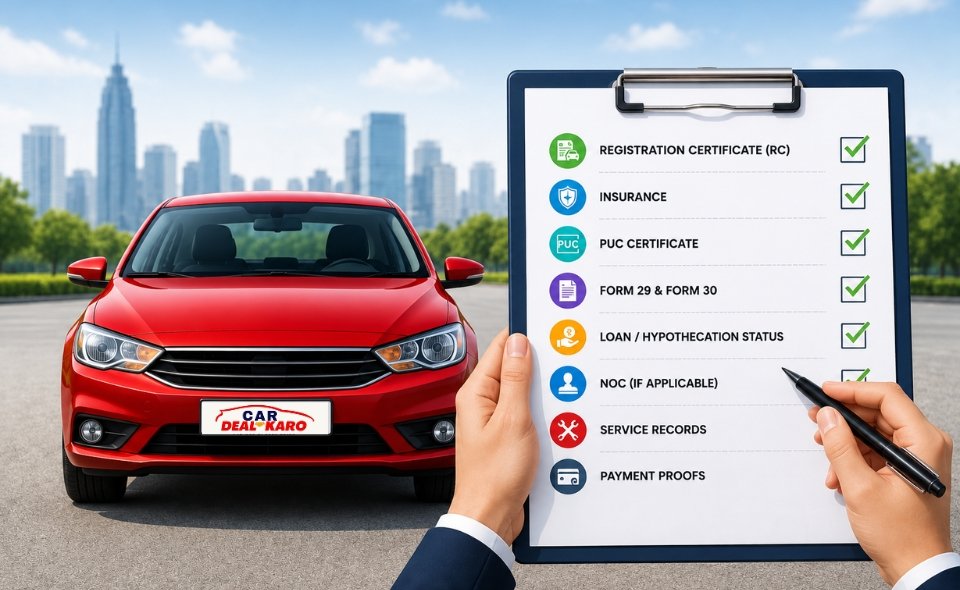
Before buying a used car, checking its documents is just as important as checking its condition and price. The right documents can help you verify the car’s ownership, registration, insurance and loan status before you make the payment.
1. Registration Certificate (RC)
The Registration Certificate (RC) is one of the most important documents for a used car. It contains important information about the vehicle and its registered owner.
Check the following details:
- Owner’s name
- Registration number
- Make and model
- Fuel type
- Engine number
- Chassis number
- Registration date
- Financier or hypothecation details, if mentioned
Most importantly, match the engine and chassis numbers with the car. If the details do not match, do not ignore the issue. Get it checked before going ahead with the deal.
What if the RC shows a loan?
If the RC shows hypothecation or financier details, ask the seller about the car loan.
If the loan has already been paid, ask for proper loan-closure documents and make sure the required records are updated. Do not depend only on the seller’s verbal confirmation.
2. Car Insurance
Insurance is another important document you should check before buying a used car. Third-party motor insurance is mandatory for vehicles being driven on public roads in India.
Check:
- Insurance company
- Policy number
- Registration number
- Engine and chassis details
- Policy start and expiry date
- Type of insurance cover
- Insured person’s name
- Previous claim details, if available
The details on the insurance policy should match the vehicle.
After buying the car, the insurance should also be updated in the buyer’s name through the insurer’s process. IRDAI states that the registration and insurance should be in the same name and address. Also remember that the No Claim Bonus (NCB) belongs to the insured person, not the car, so it does not automatically move to the new owner.
3. Pollution Under Control (PUC) Certificate
The PUC certificate shows that the vehicle’s emissions have been tested.
Before buying, check:
- Registration number
- PUC validity
- Fuel type
- Test details
- Whether the certificate belongs to the same car
PUC is also included in the documents used for the normal ownership-transfer process. Do not ignore an expired PUC just because the car is in good condition. Ask the seller about it and complete the required formalities.
4. Form 29
Form 29 is the notice related to the transfer of ownership of a motor vehicle.
It is one of the documents used during the normal ownership-transfer process. Make sure the vehicle details and buyer and seller details are filled in correctly.
5. Form 30
Form 30 is the application for transfer of ownership of the vehicle.For a normal sale, Form 29 and Form 30 are used along with the required supporting documents.
For vehicles registered within the same state, Parivahan states that the transferee should apply for ownership transfer in Form 30 within 14 days of the transfer. For vehicles registered in another state, the stated period is 45 days, along with the required additional documents. Since the process can depend on the state and RTO, always check the latest requirements with the concerned RTO or official Parivahan service.
6. PAN Card or Form 60
PAN-related documents may also be required during the ownership-transfer process. The Parivahan list includes the PAN card of the seller and purchaser or Form 60, where applicable. Keep the required document ready so that the transfer process does not get delayed.
7. Identity and Address Proof
The buyer may need identity and address proof for the ownership transfer. The exact documents accepted can depend on the RTO. Parivahan includes proof of address and proof of date of birth of the purchaser, where applicable.
Before visiting the RTO, check which documents are accepted so you can avoid unnecessary visits.
8. NOC for Interstate Transfer
If you are buying a car registered in another state, additional paperwork may be needed. An NOC (No Objection Certificate) from the registering authority may be required in certain interstate transfer cases.
Before buying an interstate car, check:
- Current registration state
- RTO handling the transfer
- Whether NOC is required
- Additional tax or registration requirements
- Other documents needed for the transfer
Do not assume that an interstate car follows exactly the same process as a car registered in your state.
9. Original Purchase Invoice
If available, ask for a copy of the original purchase invoice.
It may not always be available, especially if the car is several years old or has changed owners. Still, it can be useful for checking the vehicle’s original details and keeping a complete record of the purchase.
10. Loan Closure Documents
If the car was purchased using a loan, check its finance status carefully.
If the seller says the loan is fully paid, ask for the loan-closure proof and check whether the hypothecation details have been properly updated. Buying a car with unresolved loan or financier issues can create problems during ownership transfer.
Documents Needed for Used Car Ownership Transfer
For a normal used-car transfer, the required documents can include:
- Registration Certificate (RC)
- Form 29
- Form 30
- Insurance certificate
- PUC certificate
- PAN card or Form 60, where applicable
- Address proof
- Proof of date of birth, where applicable
- Chassis and engine pencil print, where required
- Purchaser’s undertaking, where required
- Passport-size photograph, where required
- Tax clearance certificate, where required
The exact requirements can change depending on the state, RTO and type of transfer. So, check the latest requirements with the official Parivahan service or concerned RTO.
What Should You Collect From the Seller?
Before taking delivery, try to keep copies of all important records, including:
- RC
- Insurance
- PUC
- Form 29
- Form 30
- Loan-closure documents, if applicable
- NOC, if applicable
- Service records
- Repair bills
- Warranty documents, if applicable
- Sale or purchase agreement
- Payment proof
- Relevant seller documents
- Duplicate key, if available
Keep digital copies as well as physical copies wherever possible.
Do Not Pay Before Checking the Documents
One common mistake buyers make is paying the full amount before checking the paperwork.
Before making the final payment, check:
Car condition + documents + ownership + insurance + loan status + payment terms
If you find a mismatch in the RC, engine number, chassis number, insurance or ownership details, stop and get it verified first. Never simply accept a promise that “the documents will be arranged later.” First understand what is missing and who will arrange it.
Final Tips for a Safe Used Car Purchase
Whether you are buying from an individual seller or a dealer, always check the documents yourself.
- Do not ignore any document mismatch.
- Verify original or official digital records where possible.
- Check the seller’s identity.
- Check for pending loans or hypothecation.
- Complete ownership transfer on time.
- Update the insurance in your name.
- Keep payment proof.
- Put any important promise from the seller in writing.
Final Words
Buying a used car is not only about getting the right car at the right price. Checking the documents is just as important. Before making the payment, carefully check the RC, insurance, PUC, ownership details, Form 29, Form 30 and loan or hypothecation status.
Take your time and verify everything properly. A few extra minutes spent checking the paperwork can save you from bigger problems later. At Car Deal Karo, you can explore used cars with clear and important vehicle details, helping you make a more informed decision before buying.
Whether you buy from an individual or a dealer, remember one simple rule: check the car, check the documents and then complete the deal. Ye version better hai because Car Deal Karo ko naturally introduce karta hai, but false claim jaise “we verify all documents” nahi karta jab tak website par aap actually ye service provide nahi karte.

