When buying a car, most people look at its mileage, engine, price, comfort, and features. But there is one more thing you should never ignore, and that is car safety. Whether you drive in city traffic, on highways, or during the rainy season, having good safety features can make a big difference.
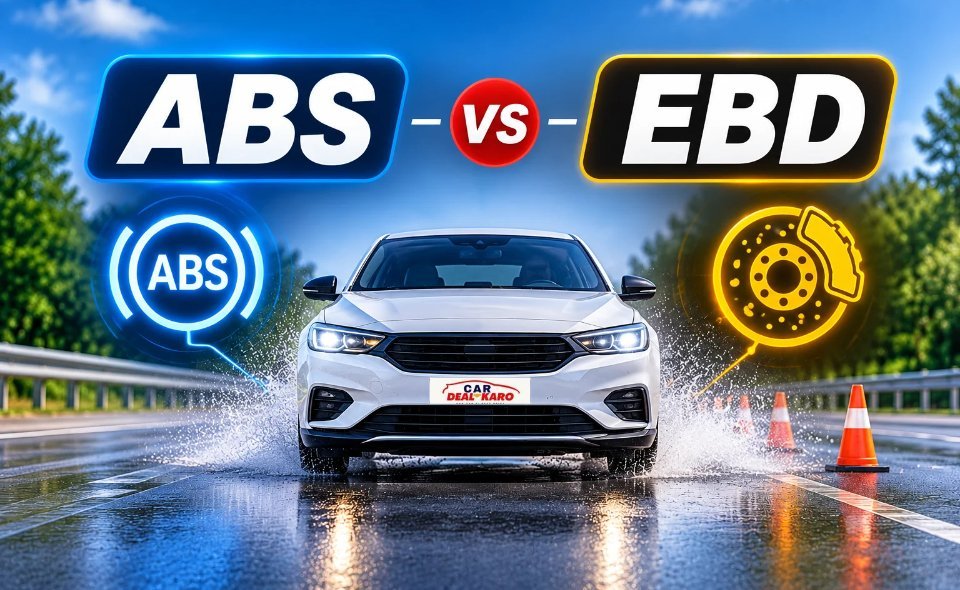
ABS and EBD are two important safety features found in many modern cars. Both are related to the braking system, but they do different jobs. ABS helps prevent the wheels from locking during sudden braking, while EBD helps distribute the braking force properly between the wheels. If you are planning to buy a new or second-hand car, it is important to understand how these systems work and why they are useful. Let’s understand ABS and EBD in simple words.
What Is ABS (Anti-lock Braking System)?

ABS stands for Anti-lock Braking System. It is a safety feature that helps prevent the wheels from locking when you apply the brakes suddenly or with full force.
For example, imagine you are driving your car on a wet road, and suddenly another vehicle comes in front of you. You press the brake pedal hard to stop the car. In this situation, the wheels may stop rotating while the car is still moving.
This is called wheel locking. When the wheels get locked, you may lose some control over the steering, and the car can start skidding. This can make it difficult to control the vehicle. This is where ABS helps. It automatically controls the brake pressure and helps the wheels keep rotating during sudden braking. As a result, the driver can maintain better steering control while slowing down the car.
How Does ABS Work?
The ABS braking system uses three main parts: wheel speed sensors, an Electronic Control Unit (ECU), and a hydraulic control unit.
Here is how the system works:
- Wheel Speed Sensors: These sensors check the speed of each wheel and send information to the control unit.
- Electronic Control Unit (ECU): It checks the speed of the wheels and identifies if any wheel is about to lock.
- Hydraulic Control Unit: It automatically adjusts the brake pressure to help prevent the wheel from locking.
- Continuous Monitoring: The system keeps checking the wheel speed and adjusting the brake pressure until the car slows down.
For example, if you suddenly apply the brakes on a wet road, ABS helps prevent the wheels from staying locked. This gives you better control over the steering while braking. You may also feel some vibration or a pulsing movement in the brake pedal when ABS is working. Don’t worry, this is normal and means the system is active.
What Is EBD (Electronic Brake-force Distribution)?

EBD stands for Electronic Brake-force Distribution. It is another important car safety feature that helps distribute braking force between the wheels according to the vehicle’s weight and road conditions.
Let’s understand this with a simple example.
When you apply the brakes, the weight of the car moves towards the front. Because of this, the front and rear wheels may need different amounts of braking force. The same thing happens when you travel with passengers and luggage. A fully loaded car has a different weight distribution compared to a car with only the driver inside. EBD understands these changes and adjusts the braking force accordingly. It helps maintain better braking balance and reduces the chances of the rear wheels locking too early.
How Does EBD Work?
EBD works along with the ABS system and uses information from the wheel speed sensors to adjust the braking force.
Here is how it works:
- Checks Wheel Speed: The system keeps checking how fast each wheel is rotating.
- Understands Braking Conditions: It checks the difference in wheel movement and the braking conditions.
- Adjusts Brake Pressure: It changes the braking force according to the vehicle’s weight and available tyre grip.
- Maintains Better Balance: It helps distribute the braking force properly and reduces the chances of the rear wheels locking.
For example, if you are traveling with five passengers and luggage, the weight of your car will be different from its normal condition. EBD adjusts the braking force to match the load and helps the car maintain better balance while braking.
ABS vs EBD: What Is the Main Difference?
ABS and EBD both help improve car safety, but their working methods are different. ABS mainly prevents the wheels from locking during sudden braking, while EBD helps distribute the braking force properly between the wheels.
Let’s look at the main differences:
| Comparison | ABS | EBD |
| Full Form | Anti-lock Braking System | Electronic Brakeforce Distribution |
| Main Purpose | Helps prevent wheel locking | Distributes braking force between wheels |
| How It Works | Controls brake pressure when a wheel is about to lock | Adjusts brake pressure according to load and grip |
| Main Benefit | Helps maintain steering control | Helps maintain better braking balance |
| When It Helps | Mainly during sudden or hard braking | During braking under different load conditions |
| Technology | Uses wheel speed sensors and a control unit | Works with ABS-related sensors and braking components |
In simple words, ABS helps prevent the wheels from locking, while EBD makes sure that the braking force is properly distributed across the wheels. Both systems work together to make braking safer and help the driver maintain better control of the car.
Benefits of ABS and EBD in Cars
ABS and EBD are useful safety features that help improve the braking performance of a car. Here are some of their main benefits.
1. Better Control During Sudden Braking
Sometimes, you may need to apply the brakes suddenly because another vehicle stops in front of you or something unexpectedly comes onto the road. ABS helps prevent the wheels from locking, allowing you to maintain better control over the steering.
2. Better Braking Balance
EBD adjusts the braking force according to the weight of the car and road grip. This is especially useful when you are traveling with passengers or carrying luggage.
3. Helps Reduce the Risk of Skidding
When the wheels lock during sudden braking, the car can start skidding. ABS helps reduce this problem by controlling brake pressure. EBD also helps prevent too much braking force from being applied to the rear wheels.
4. Useful on Wet and Slippery Roads
During the rainy season, roads can become slippery, making it difficult to stop a car safely. ABS and EBD help manage braking in such conditions. However, the result also depends on tyre condition, road surface and driving speed.
5. Better Vehicle Stability
Both systems help manage braking in different ways. ABS controls wheel locking, while EBD balances the braking force. Together, they help the driver maintain better control during braking.
Final Thoughts
ABS and EBD are two important safety features that every car buyer should understand. Although both are part of the braking system, they have different roles. ABS helps prevent the wheels from locking during sudden braking, while EBD distributes the braking force according to the car’s weight and road conditions.
If you are planning to buy a second-hand car, don’t just check its mileage, engine, and looks. Also check its safety features, braking condition, and service history before making your final decision. At Car Deal Karo, we help you explore a range of used cars in Jaipur according to your budget and requirements. Whether you are looking to buy, sell, or exchange a car, you can find suitable options at the right price. Before choosing your next car, compare available models and check their condition, safety features, and service history to make a better buying decision.