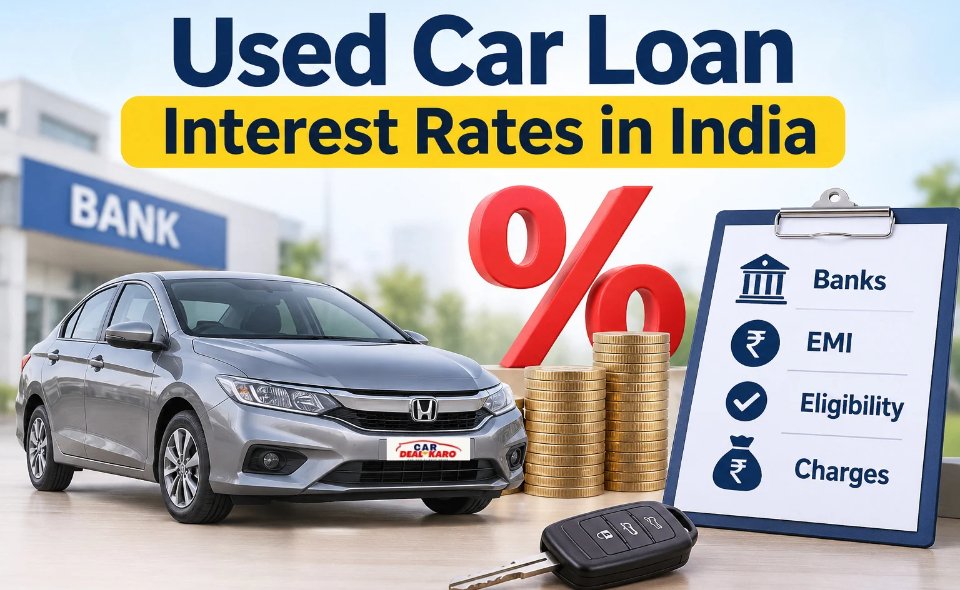
Buying a used car is a good way to own a car without spending a big amount on a brand-new one. You can find a second-hand car that matches your budget and daily needs. But what if you do not have enough money to pay the full amount at once? In that case, a used car loan can make things easier.
Today, many banks and finance companies in India offer loans for pre-owned cars. But before applying, you should know how much interest you will have to pay, what EMI you can afford, and which documents are required. In this blog, we will explain used car loan interest rates in India, different bank options, loan eligibility, EMI calculation, and other charges. We will also share some simple tips that can help you choose a suitable loan.
What Is a Used Car Loan?
A used car loan is a loan that helps you buy a car that has already been owned by someone else. Instead of paying the full car price from your savings, you can take financial help from a bank or finance company and repay the amount through monthly EMIs. For example, suppose you want to buy a second-hand car worth ₹6 lakh.
You have ₹1.5 lakh saved for the down payment. Now, you need ₹4.5 lakh to complete the purchase. You can apply for a used car loan for this amount, depending on the lender’s rules and your eligibility. Once your loan is approved, you have to pay a fixed EMI every month for the selected loan period. The interest rate and loan amount usually depend on your income, credit score, car age, vehicle condition, and the lender’s terms.
Used Car Loan Interest Rates in India 2026
Before applying for a car loan, one of the first things you should check is the interest rate. It tells you how much extra money you will pay to the lender for borrowing the amount. Different banks and finance companies offer different interest rates for used car loans. Some lenders show a starting interest rate, while others provide a range. Your final rate may depend on your credit score, income, loan amount, and the car you want to purchase.
Here are some indicative interest rates published by selected lenders:
| Bank or Finance Company | Published Interest Rate |
| Punjab National Bank | 9.45%–11.55% p.a. |
| State Bank of India | 10.45%–15.60% p.a. |
| HDFC Bank | 11.25% p.a. onwards |
| Axis Bank | 12.95%–14.55% p.a. |
| ICICI Bank | 10% p.a. onwards |
| Tata Capital | 10.49% p.a. onwards |
Note: These are indicative published rates, not confirmed offers for every customer. The actual rate may change based on your profile and the lender’s current terms. Please check the latest rate with the bank before applying.
For example, SBI offers a Certified Pre-owned Car Loan with a published interest rate range. HDFC Bank and Axis Bank also have their own rates and loan conditions. So, do not select a bank only because its starting interest rate looks low. First, check the rate offered to you, the EMI, and the total amount you will have to repay.
What Factors Affect Used Car Loan Interest Rates?
Have you ever wondered why two people can get different interest rates for a similar car loan? This happens because banks check the applicant’s financial details and the selected vehicle before approving the loan.
Here are some common factors that can affect your second-hand car loan interest rate.
1. Your Credit Score
Your credit score is one of the important things banks check before approving a loan. It gives them an idea of how you have handled your previous loans and credit card payments.
If you have paid your EMIs and credit card bills on time, it can help you get better loan offers. A credit score of 750 or above is generally considered helpful, but the final decision depends on the lender. On the other hand, a low credit score or a history of missed payments may lead to a higher interest rate or even loan rejection.
2. Your Monthly Income
Your income helps the bank understand whether you can manage the monthly EMI without facing financial problems.
If you have a regular salary or a stable business income, it can support your loan application. Banks may also check your existing EMIs, credit card dues, and other monthly expenses before deciding your loan amount.
3. Age and Condition of the Car
The car you want to purchase also plays an important role in loan approval. Banks may prefer financing a newer used car compared to a very old vehicle.
They may check the car’s age, market value, registration details, and overall condition. Some lenders also have a limit on how old the car can be when the loan is fully repaid.
4. Down Payment and Loan Amount
The down payment is the amount you pay from your own pocket when purchasing a car. If you pay a higher down payment, you will need a smaller loan.
For example, if the car price is ₹5 lakh and you pay ₹1.5 lakh as a down payment, you only need a loan of ₹3.5 lakh. A lower loan amount can reduce your monthly EMI and the total interest you pay.
5. Loan Repayment Period
The loan repayment period is also called the loan tenure. It is the time given by the bank to repay the borrowed amount. If you choose a longer tenure, your monthly EMI may be lower. However, you may end up paying more interest over the full loan period.
A shorter tenure can help you save on interest, but your monthly EMI will be higher. So, choose a period that matches your monthly budget.
How to Calculate EMI for a Used Car Loan?
Before taking a used car loan, it is always better to calculate your monthly EMI. This will help you understand how much money you need to keep aside every month.
Your EMI mainly depends on three things:
- Loan Amount: The total amount you borrow from the bank.
- Interest Rate: The yearly interest charged by the lender.
- Loan Tenure: The time you get to repay the loan.
Let’s understand with a simple example.
Suppose you take a loan of ₹5 lakh at an annual interest rate of 12% for five years. Your approximate monthly EMI will be ₹11,122. This is an example for understanding the calculation. Your actual EMI may be different depending on the final interest rate and loan terms.
You can also use an online used car loan EMI calculator. Just enter the loan amount, interest rate, and repayment period to get an estimated monthly EMI. Try different amounts and tenures to see which option suits your budget.
Documents Required for a Used Car Loan
If you are planning to buy a pre-owned car through a loan, keep your documents ready before applying. This can make the process easier and help avoid unnecessary delays.
Here are some documents that banks may ask for:
1. Identity Proof
- Aadhaar Card
- PAN Card
- Passport or Voter ID, if accepted by the lender
2. Address Proof
- Aadhaar Card
- Electricity or other utility bill
- Passport or any other accepted address proof
3. Income Proof for Salaried People
- Latest salary slips
- Bank statements
- Form 16 or income tax documents, if required
4. Income Proof for Self-Employed People
- Income tax returns
- Bank statements
- Business-related financial documents
5. Car-Related Documents
- Registration Certificate (RC)
- Insurance details
- Car valuation or inspection report, if required
- Seller and vehicle details
Remember that the document list can change from one lender to another. It is better to confirm the requirements with your selected bank before submitting the application.
Is Taking a Loan for a Used Car a Good Decision?
Taking a loan for a used car can be a good option if you need a car but do not want to spend all your savings at once. It gives you the option to pay for the car through monthly instalments. However, you should first check your monthly income and expenses. Make sure you can manage the EMI along with your regular household expenses. Also, remember that buying a second-hand car involves other costs.
You may have to spend money on insurance, servicing, fuel and repairs. If you are buying an older car, keep some extra money aside for unexpected maintenance. Before finalising the car, check its service history, accident record, ownership details, RC, insurance and pending traffic challans. Also, confirm with the lender whether the selected vehicle is eligible for financing.
Final Thoughts
Buying a used car through a loan can be a convenient option, but choosing the right loan is equally important. Do not make your decision only by looking at the interest rate. Check the EMI, loan tenure, down payment, and extra charges as well.
Compare offers from different banks, check your eligibility, and calculate your monthly expenses before applying. Choose a loan that you can repay comfortably without putting extra pressure on your budget. With proper planning and a little research, you can make a better decision and enjoy your pre-owned car without unnecessary financial stress.