Buying a second-hand car can help you save money, but there are a few things you should check before finalising the deal. Apart from the car’s price, condition and mileage, you should also check its documents, ownership details and pending traffic challans. Sometimes, the previous owner may have unpaid traffic fines against the car.
These fines can still appear in the vehicle’s registration details. If you do not check them before buying, you may face extra expenses or problems with some vehicle-related services later. So, whether you are planning to buy a used car in Jaipur or anywhere else in Rajasthan, checking its challan status is an important step. In this guide, we will explain how to check pending challans online, who should pay old fines, and what you can do to avoid problems after buying a car.
What Are Pending Challans on a Used Car?
A traffic challan is a fine issued when someone does not follow traffic rules. It can be issued for different reasons, such as over-speeding, jumping a red light, wrong parking, driving without a helmet, or not wearing a seat belt. Some challans are issued directly by traffic police, while others are recorded through traffic cameras and online systems.
These are commonly known as e-challans. If a fine is not paid, it may continue to appear as pending in the official records. When you check a second-hand car, you may find one or more unpaid challans linked to its registration number. This is why it is always better to check the challan details before making the final payment. A small check before buying can help you avoid unnecessary problems later.
What Problems Can Pending Challans Cause After Buying a Car?
Ignoring old traffic fines can create a few problems after purchasing a used car. Here are some common issues you should know about.
1. Extra Expenses After Purchase
Imagine you have checked the car, agreed on the price, and completed the payment. Later, you find that the vehicle has two or three unpaid challans. Now, you may have to deal with an extra expense that you were not expecting.
To avoid this situation, check the challan details before paying for the car. If any fines are pending, discuss them with the seller and decide who will clear them before completing the deal.
2. Problems with Vehicle-Related Services
Pending challans can also create problems with some vehicle-related services. As per the Ministry of Road Transport and Highways, certain services, such as NOC, fitness and tax-related work, may be restricted when a challan remains pending or unsettled. However, it does not mean that every pending challan will automatically stop the RC transfer.
The situation depends on the challan status and the type of service you are applying for. So, if you find any unpaid fines, check the vehicle records and confirm the matter with the concerned RTO before moving ahead.
3. Disagreements Between Buyer and Seller
Another common problem is confusion between the buyer and seller about who should pay the old challans. For example, the buyer may expect the seller to clear all pending fines, while the seller may think that the buyer has agreed to pay them. This can create unnecessary arguments after the deal is completed.
The best way to avoid such problems is to discuss all pending challans before signing the sale papers or making the final payment. Both parties should be clear about the payment responsibility.
How to Check Pending Challans on a Used Car Online?
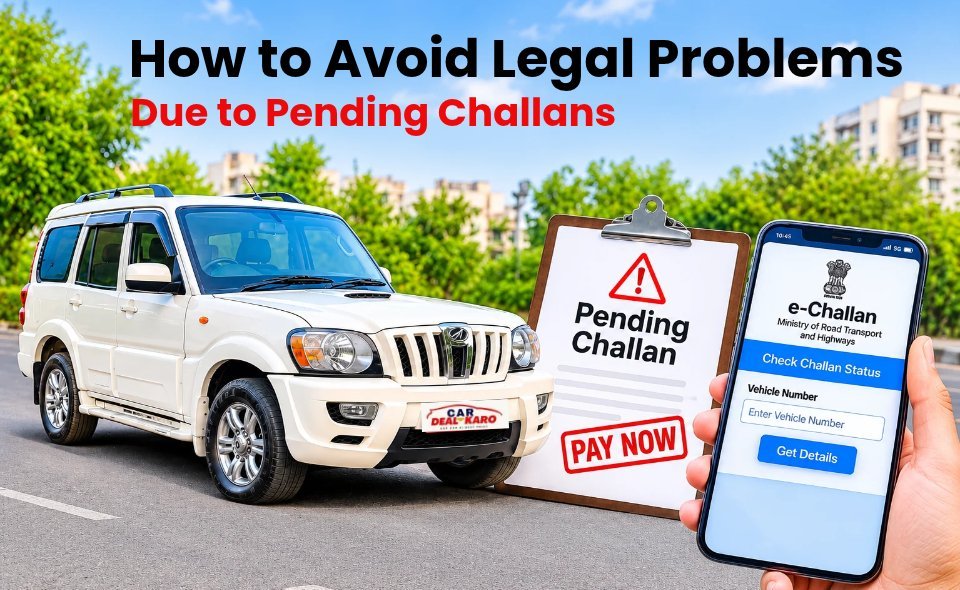
You do not always need to visit the RTO to check a vehicle’s challan details. You can check the available records online through the official e-Challan website of the Government of India.
Follow these simple steps:
- Visit the official website: e-Challan Portal.
- Open the option to check challan status.
- Enter the vehicle registration number or other details asked for on the website.
- Complete the captcha or verification process.
- Submit the details to view the available challan records.
- Check the challan date, reason, fine amount, and payment status.
If you find any unpaid challans, note down their details and discuss them with the seller before buying the car. Also, make sure to check whether the challan has already been paid. Sometimes, the seller may have completed the payment, but the website may still show the old status. In such cases, ask for the payment receipt and verify the details again.
Important: Always use the official government website to check or pay traffic fines. Avoid clicking on unknown payment links received through SMS or WhatsApp. Some fake websites and apps look similar to the official e-Challan portal, so be careful before making any payment.
Who Should Pay Old Challans on a Used Car?
This is an important point that both buyers and sellers should discuss before completing a used car deal. As a practical step, the seller should clear valid challans issued before the sale. The buyer should check the payment status and collect the payment proof before completing the purchase.
For example, suppose you are buying a second-hand car and find two unpaid challans from the previous owner’s time. In this situation, you can ask the seller to clear both fines before handing over the vehicle. However, if both parties agree that the buyer will pay the pending amount, make sure this agreement is written clearly in the sale agreement.
Mention the following details:
- Pending challan numbers
- Total unpaid fine amount
- Name of the person responsible for payment
- Payment deadline, if agreed
- Payment receipts after the fines are cleared
Also, remember that every old challan does not automatically become the buyer’s personal legal responsibility just because the vehicle has been sold. The responsibility may depend on the type of violation and the facts of the case. If you find an incorrect challan or a case that has already reached court, contact the concerned authority and understand the proper process before making any payment.
Can Pending Challans Affect RC Transfer?
Yes, pending challans can create problems with some vehicle-related services. This is why checking and clearing outstanding fines before applying for ownership transfer is a good idea. Under Section 50 of the Motor Vehicles Act, 1988, the buyer and seller have certain responsibilities when a vehicle is sold. Both parties need to report the ownership change to the concerned registering authority within the given time.
For a normal vehicle sale, the reporting timelines are:
- Same-state vehicle: The seller should report the sale within 14 days.
- Vehicle registered in another state: The seller should follow the 45-day reporting requirement and submit the required NOC-related documents or proof.
- Buyer: The buyer should report the ownership transfer within 30 days.
These timelines are important, so do not delay the RC transfer after buying a used car. Make sure the new owner’s details are updated in the official vehicle records. If any challan is pending, check whether it has created a restriction on the service you need. It is better to ask the seller to resolve the issue before completing the transfer process.
What Should You Do If You Find Pending Challans Before Buying?
Finding pending challans does not always mean you have to cancel the deal. First, check the details properly and discuss the matter with the seller.
Here are some simple steps you can follow:
- Talk to the seller: Share the pending challan details and ask the seller about them.
- Check each challan: Verify the vehicle number, challan date, reason, and fine amount on the official website.
- Confirm the payment status: Make sure the challan has not already been paid or settled.
- Decide who will pay: Ask the seller to clear valid old fines. If you agree on another arrangement, mention it clearly in the sale agreement.
- Keep payment receipts: Save copies of all challan payment receipts and related documents.
- Check the status again: After making the payment, visit the official portal and confirm whether the challan status has been updated.
- Handle disputed challans properly: If a challan is incorrect or the matter has gone to court, follow the official process before making any payment.
Do not complete the deal only on the seller’s promise that the fines will be cleared later. Make sure the payment responsibility is clear before taking possession of the car.
Final Words
Buying a second-hand car is not just about finding a good model at the right price. You should also check its documents, ownership details, and pending traffic challans before completing the deal. A car may look good and be available at a reasonable price, but unpaid traffic fines can lead to extra expenses or problems with some vehicle-related services later. Before making the final payment, check the vehicle’s challan status on the official e-Challan website.
If you find any unpaid fines, discuss them with the seller and decide who will clear them. Also, keep the payment receipts and check whether the records have been updated. Along with challans, do not forget to check the RC, insurance, loan status, and other important documents. Spending a little extra time on these checks can help you avoid unnecessary trouble and make your used car buying experience easier.