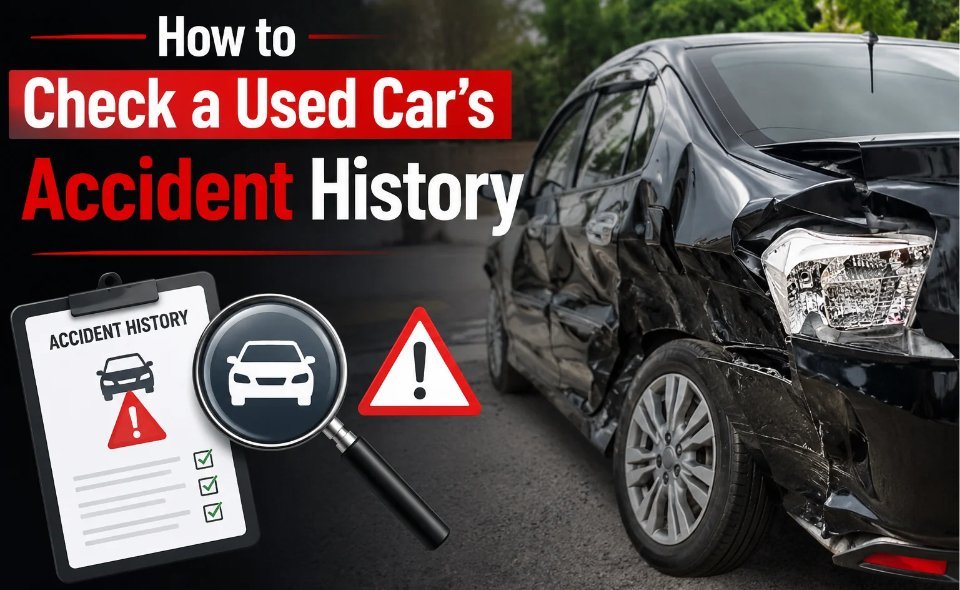
Buying a second-hand car is a good way to save money, but there are a few things you should check before making a decision. One of the most important things is the car’s accident history. A car may look clean from the outside, but that does not always mean it has never been in an accident.
Sometimes, the owner gets the damaged parts repaired, repainted, or replaced before putting the car up for sale. If you do not check these things properly, you may end up buying a car that needs expensive repairs later. So, before buying a used car, take some time to check its records, insurance details, and overall condition. In India, there is no single government website where you can find the complete accident history of every car. You need to check different records and inspect the vehicle properly. Here are some simple ways to do that.
1. Ask the Seller If the Car Has Ever Been in an Accident
The first thing you should do is ask the seller directly whether the car has ever been involved in an accident. If the seller says yes, do not stop there. Ask a few more questions to understand what actually happened.
- When did the accident happen?
- Which parts of the car were damaged?
- Was the bumper, bonnet or any door replaced?
- Was the chassis damaged?
- Did the airbags open during the accident?
- Where was the car repaired?
Also, ask the seller to show you the repair bills, insurance papers or workshop records, if available. A small scratch or bumper repair is not the same as major damage to the car’s structure. So, try to understand how serious the accident was before deciding whether to buy the car.
2. Check the Car’s Paint and Body

You do not need to be a car expert to notice some common signs of previous repairs. Start by checking the car’s paint and body in natural daylight. Look at the bonnet, doors, front and rear fenders, bumpers and boot. Check whether the paint colour and finish look the same across all panels.
Here are a few things to notice:
- One panel looks darker or lighter than the others.
- The paint looks uneven or has a different finish.
- You can see paint marks around rubber seals or window edges.
- Some areas have dents or uneven surfaces.
- One part of the car looks much newer than the rest.
These signs may mean that a part was repainted or repaired earlier. You can also ask a car inspection expert to check the paint using a paint thickness gauge. However, keep in mind that repainting does not always mean the car has met with a major accident. It could be due to a small dent or scratch as well. Ask for the reason and check the panel properly.
3. Check the Gaps Between Doors, Bonnet and Other Panels
Take a closer look at the gaps between different body panels. In a car that has not had major body repairs, these gaps are usually even. Check the spaces around the bonnet, doors, headlights, tail lights, boot and bumpers.
Compare the left and right sides of the car. If one side has a wider gap or a panel does not look properly fitted, ask the seller about it. You should also open and close all the doors, bonnet and boot. They should open and close without getting stuck or making unusual noises. Uneven gaps do not always mean the car has been in an accident, but they are worth checking before you go ahead with the deal.
4. Get the Chassis and Underbody Checked
The chassis is one of the most important parts of a car. It supports the main structure, so any major damage to it should be taken seriously. Some damage is difficult to notice when you check the car from outside. That is why it is better to get the car checked from underneath by a trusted mechanic.
Ask the mechanic to look for:
- Welding marks on the metal parts.
- Bent or damaged sections.
- Fresh paint around repaired areas.
- Rust near repaired parts.
- Signs of metal being bent back into shape.
- Poorly repaired or replaced structural parts.
The chassis rails, pillars and floor area should be checked carefully. A small dent on an outer panel may not be a big issue, but damage to the main structure can affect the car’s safety. If the mechanic finds any such problem, understand the full repair details before considering the car.
5. Check Service Records and Previous Repair Bills
Service records can tell you a lot about how a car was maintained. Before buying, ask the seller for the service booklet, workshop bills and previous repair invoices. If the car was serviced at an authorized service center, you can contact that center with the seller’s permission. They may be able to share available service details using the car’s VIN or chassis number, depending on their records and policies.
While checking the bills, look for:
- Any major body repair work.
- Replacement of the bonnet, doors or bumpers.
- Headlight or tail light replacement.
- Suspension or steering repairs.
- Airbag-related repairs.
- Repeated repairs to the same part.
You should also compare the kilometer readings mentioned on different service bills. The readings should make sense and follow a proper order. If the seller does not have service records, it does not automatically mean the car has accident damage. But in that case, a proper inspection becomes even more important.
6. Check the Previous Insurance Claim Details
Insurance records can also help you understand whether the car was involved in an accident in the past. Ask the seller for previous insurance policies, claim papers, and repair bills. If an insurance claim was made, check which parts were damaged and what work was done on the car. You can also contact the previous insurance company with the owner’s permission.
The company may share the available information after checking the required details. The Insurance Information Bureau’s V-Seva service may provide some insurance-related information, but the details available can be limited. It should not be treated as a complete accident history report. Also, do not assume that every insurance claim means major accident damage. Sometimes, a claim may be made for a small repair. Always check what actually happened.
7. Check the RC and Vehicle Details Online
Before buying a used car, make sure its registration details are correct. You can use the official Parivahan or VAHAN portal to check the available vehicle information.
Match the details with the car’s documents, including:
- Registration number.
- Chassis number.
- Engine number.
- Fuel type.
- Model and variant.
- Registered owner details.
The chassis and engine numbers on the car should match the numbers mentioned in the documents. You can also visit the official e-Challan portal to check whether there are any pending traffic challans on the vehicle. One thing to remember is that Parivahan and VAHAN help you check registration and other vehicle details. They do not provide the complete accident or insurance claim history of a car.
8. Check the Airbags, Seat Belts and Dashboard Warning Lights
Never ignore the safety features when checking a second-hand car. If a car has been involved in a major accident, its airbags and seat belts may also have been affected. Start the car and check the airbag warning light. It should work properly and turn off as expected after starting the vehicle.
Also check the following:
- Seat belts should lock and release properly.
- There should be no unusual signs of repair around the steering wheel.
- Check the dashboard for signs of damage.
- Ask whether the airbags were replaced after any previous accident.
If the airbag warning light stays on or does not work as expected, get the car checked by a professional. A diagnostic scan can help find certain problems. Do not assume that the airbags are working just because the dashboard looks fine.
9. Get the Car Checked by a Mechanic
Even if the car looks good and its documents are complete, some problems may not be visible during a normal inspection. Before making the final payment, take the car to a trusted mechanic or a professional car inspection center. Ask them to check the engine, gearbox, chassis, suspension, steering, brakes, tyres, electrical system, airbags and underbody.
They can also look for signs of previous repairs or repainting. If possible, ask for a written inspection report. It will help you understand the car’s condition and whether any parts need repair or replacement. A short test drive is not enough to know everything about a used car. Getting it checked by an expert can help you avoid problems after buying.
10. Should You Buy a Car That Has Been in an Accident?
Finding out that a car was repaired after an accident does not always mean you should reject it. What matters is how serious the damage was and how well the repairs were done. For example, a small dent or bumper repair may not affect the car’s overall condition. But major chassis damage, poor repairs to the pillars, or airbag problems should not be ignored.
Before buying such a car, make sure you:
- Ask the seller for the full repair details.
- Check the available repair bills.
- Get the car inspected by an independent mechanic.
- Understand whether any major repairs are still needed.
- Compare its price with similar cars in the market.
If the car has major structural damage, unexplained repairs, or safety-related problems, it is better to look for another option.
Common Mistakes to Avoid When Checking a Used Car
Many buyers get excited after finding a car at a good price. In a hurry, they sometimes ignore important checks. Here are a few common mistakes you should avoid:
- Trusting the seller without checking the car’s records.
- Thinking that a clean-looking car has never met with an accident.
- Ignoring different paint shades or uneven panel gaps.
- Not checking the chassis and underbody.
- Skipping insurance papers and repair bills.
- Buying the car without a mechanic’s inspection.
- Paying the full amount before checking the documents.
Take your time and check everything properly. It is better to spend a little more time before buying than to face expensive repair problems later.
Final Thoughts
Checking a used car’s accident history is just as important as checking its price, mileage and engine condition. Before buying, look at the paint, body panels, chassis, service records, insurance papers, airbags and vehicle documents. Remember, no single online check can tell you the complete accident history of every car.
So, do not depend on one source or only the seller’s words. Check the available records and get the car inspected by a trusted mechanic. At Car Deal Karo, you can explore second-hand cars and get support with the buying process, loan assistance, and documentation. If you are planning to buy a used car in Jaipur, take the time to check its condition and history before making your final decision.